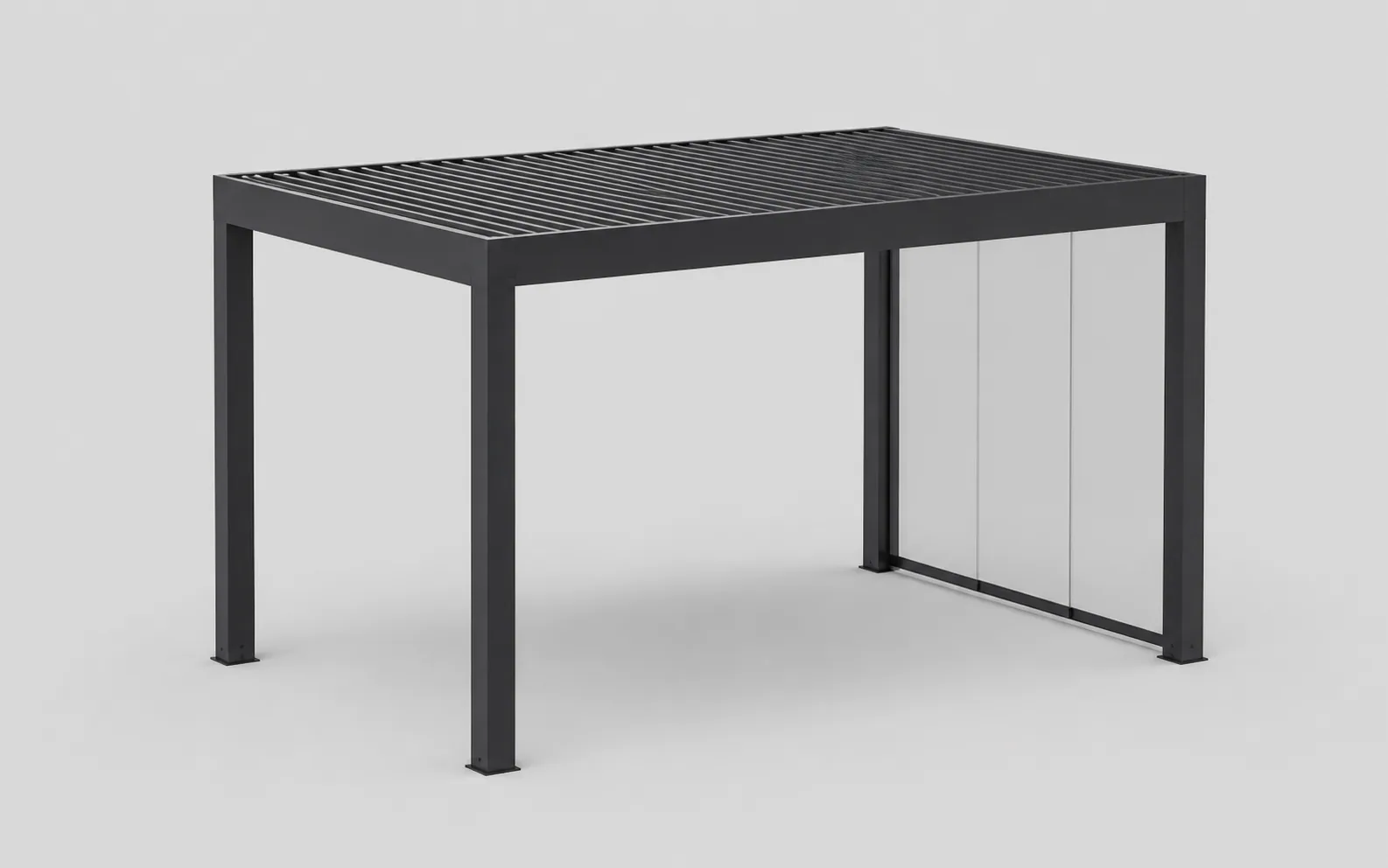
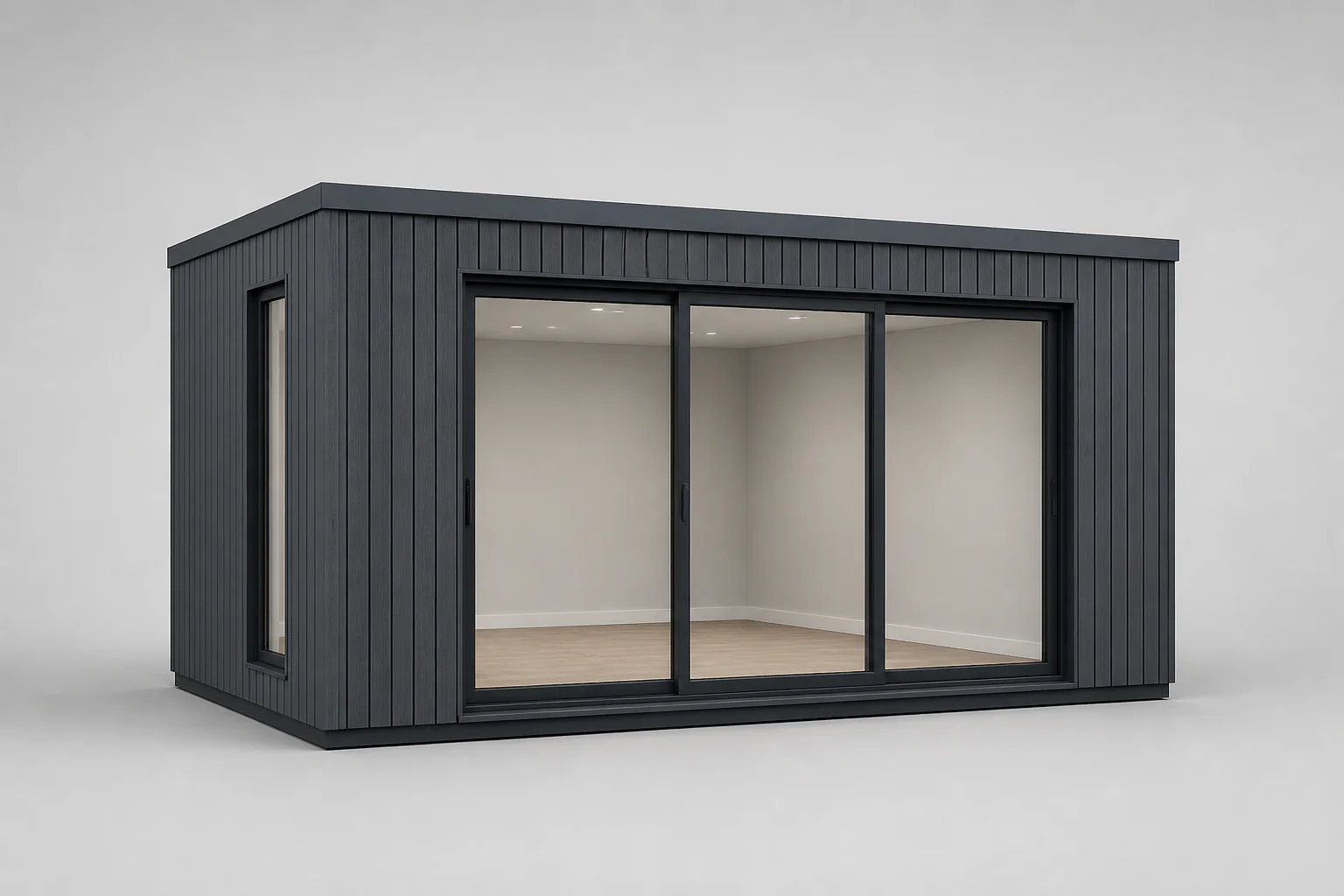
Custom product configurator software
Built around your product. Governed beyond the demo.
Configurix can tailor product rules, interactive 3D, live pricing, brand, roles, documents and integrations while preserving one accepted configuration from customer choice to the next commercial or operational action.
Your product
Options, dimensions, components and rules
Your experience
3D, interaction, brand and devices
Your commerce
Price, quote, approvals and order identity
Your workflow
Roles, systems, outputs and administration
Category definition
“Custom” can describe four very different commitments.
Buyers should know what is tailored, what is reusable platform capability, what is custom code and who owns each layer after launch.
Custom product configurator
A product-selection and configuration application tailored to a company's real catalogue, product rules, measurements, visual behavior, commercial logic, brand, user roles and connected workflow.
Custom around the product and operating model—not merely a different colour theme.
Custom 3D configurator
A custom configurator whose interactive representation, materials, geometry changes, cameras, annotations and device behavior are implemented for the actual product system.
3D is one governed representation of configuration state, not the sole source of truth.
Custom CPQ system
A configure-price-quote workflow tailored to product validity, account and market pricing, discounts, approvals, proposal content, revisions and commercial ownership.
CPQ emphasizes commercial control; a public visual experience may be one of its channels.
Custom-coded engine
A software engine and application built and maintained as bespoke code rather than configured on a maintained product-configurator platform.
Maximum code ownership also creates responsibility for security, hosting, tooling and lifecycle.
Interactive custom-scope planner
Start with product logic, experience and connection depth.
These choices identify the implementation foundation—not a price or delivery promise. The representative product and accepted outputs still define the real scope.
Recommended custom boundary
a versioned rule and parameter model
Deliver it through a tailored customer-to-sales project workflow.
Accept continuity through a priced configuration linked to CRM, quote, cart or order identity.
Scope rule
Product truth → tailored journey → accepted output → maintained ownership
Eight customization layers
A serious custom scope reaches beyond the front end.
Product model
Stable product identities, options, characteristics, dimensions, modules, derived values, compatibility and exception boundaries.
Evidence: A representative product can be configured across normal, boundary and invalid cases.
3D and interaction
Product-specific geometry, materials, visual states, camera behavior, annotations, touch and keyboard controls, mobile layout and performance.
Evidence: The same saved state renders correctly on agreed target devices and journeys.
Price and quote
Base prices, formulas, quantities, services, accounts, markets, discounts, tax context, visibility and approved proposal structure.
Evidence: Each displayed and quoted amount can be reproduced from documented inputs and authority.
Brand and content
Domain, typography, colour, terminology, guidance, imagery, messages, email identity, documents and localized customer communication.
Evidence: Every named customer and dealer touchpoint follows the accepted brand scope.
Roles and workflow
Public buyers, accounts, salespeople, dealers, reviewers and administrators receive explicit permissions, actions, approvals and continuation paths.
Evidence: Positive and negative role tests confirm who can see, edit, price, approve and release each record.
Integrations
APIs, events, identifiers, field ownership, retries, errors and reconciliation connect CRM, ecommerce, ERP, PIM, PLM, MES or another agreed service.
Evidence: The representative journey succeeds and fails safely with real receiving-system evidence.
Outputs
Saved projects, quotes, specifications, approvals, order data, BOMs, drawings, tasks or process-specific production packages.
Evidence: Each output is accepted for a named purpose by its operational owner.
Administration
Catalogue, rules, prices, content, translations, assets, roles, release, audit and operational visibility with a documented specialist boundary.
Evidence: Authorized owners can complete the agreed day-two changes without bypassing governance.
Configuration contract
Custom screens still need one durable product record.
This contract prevents the website, sales tool, quote and receiving system from creating different meanings for the same customer design.
01
Configuration identity
Stable project and configuration IDs, draft and accepted revisions, owner, channel and timestamps
02
Product authority
Product family, version, market, options, parameters, components, derived values and rule results
03
Visual state
Asset and material versions, camera or proof references and bindings to structured product fields
04
Commercial context
Currency, price list, account, formulas, services, tax, discounts, validity and quote status
05
Customer context
Account, contact, site or application, files, consent, language and agreed project data
06
Approval evidence
Exact accepted revision, approver, time, terms, proof, signature or review status by scope
07
Continuation targets
Lead, CRM opportunity, cart, quote, order line, survey, job or production reference
08
Operational output
Configured BOM, document, drawing, task, file or instruction identifiers and release status
09
Change lineage
Prior state, reason, owner, impact, superseding revision and downstream synchronization
10
Authority and failure
System owner per field, request identity, retry behavior, rejection, recovery and reconciliation
Architecture patterns
Four ways custom requirements can sit on a maintained foundation.
Custom experience on a governed platform
Product-specific rules, 3D, workflows and integrations are required, while the business wants maintained configuration infrastructure.
Plan ownershipYour product data, scope, brand decisions, acceptance and operating responsibilities.
AvoidAssuming platform capability proves your exact product behavior without implementation evidence.
Headless configuration service
A company needs custom website, app, dealer or ecommerce interfaces around a central configuration and project backbone.
Plan ownershipChannel frontend, orchestration boundaries, identity, analytics and experience release lifecycle.
AvoidDuplicating product validity or price rules independently in every channel.
Connected visual CPQ
The visual product, account price, approval and quote revision must behave as one commercial workflow.
Plan ownershipCommercial authority, discount policy, quote templates, account roles and order transition.
AvoidTreating the public price display as proof of complete CPQ governance.
Engineering-connected configurator
A governed sales configuration must trigger specialist calculation, CAD automation, technical review or defined production output.
Plan ownershipEngineering authority, input contract, job orchestration, file purpose, review and release status.
AvoidCalling a browser render or generated file technically released without acceptance evidence.
Administration boundary
Easy to change does not mean uncontrolled.
A maintainable custom configurator separates routine business operations from specialist model changes and applies a safe release path to both.
Business-team changes
Approved copy, guidance and media
Translations and market content
Defined prices or price-list imports
Enabled catalogue choices within the model
Users, accounts and permitted roles
Specialist changes
New product-family architecture
Geometry and parametric behavior
Complex dependency and calculation logic
New integration contracts or output generators
Security-sensitive workflow or identity changes
Controlled release
Impact analysis and test selection
Preview or staging environment
Named review and approval
Version, effective date and rollback plan
Monitoring and post-release verification
Implementation blueprint
Prove the custom system through one complete vertical slice.
Define the customer and business job
Name the audience, problem, current friction, completion action and business owner before choosing screens or technology.
Select one representative product
Use real options, dimensions, rules, prices, exceptions, assets, quotes and downstream data—not a simplified showcase product.
Write the custom boundary
List what is tailored in product logic, 3D, brand, workflow, roles, markets, integrations, administration and output.
Establish source ownership
Assign authority for product, engineering, visual, price, customer, order and production data and define version behavior.
Design the configuration contract
Agree stable fields and identities that survive interface, save, quote, approval, order and operational handoff.
Build the vertical slice
Connect one valuable end-to-end journey early, including its failure states and a real receiving-system or document output.
Accept with working evidence
Test normal, boundary, invalid, revised, role-specific, multilingual, mobile, integration and operational cases.
Prepare administration and support
Train owners, document day-two changes, monitoring, incident routes, release controls, backup and export responsibilities.
Expand reusable patterns
Add products, channels and markets by extending accepted modules and contracts instead of creating disconnected one-off applications.
Acceptance evidence
Tests that turn “custom” into observable behavior.
The representative product behaves according to approved rules at minimum, maximum and unusual valid states.
Invalid or unsupported combinations cannot progress without an explicit review route and owner.
The visible 3D state, selected values, calculated price and saved configuration remain synchronized.
Public, customer, salesperson, dealer, reviewer and administrator permissions pass negative tests.
The configured experience works with keyboard and touch and provides non-canvas access to essential choices and results.
Target mobile devices meet agreed load, interaction and visual-quality budgets with representative assets.
A saved project resumes with the same product, rules, assets, price context and accepted revision behavior.
Quote, email and document outputs use the approved brand, language, product data and revision.
Every integration handles authentication, validation, timeout, retry, duplication, rejection and reconciliation as specified.
Configured BOM, drawing, task or operational output is accepted for its named purpose by its owner.
Catalogue, price, translation and product-model changes follow the documented administration and release boundary.
Data export, retention, deletion, backup, recovery and end-of-contract responsibilities are demonstrable.
Failure patterns
Custom means branded
A logo and colour theme are delivered while product logic, price, documents and workflow remain generic.
Better: Write every tailored surface and behavior into the acceptance scope.
The demo product becomes the specification
A polished happy path hides missing rules, roles, exceptions and downstream requirements.
Better: Use one representative real product and written boundary cases.
Rules live in the interface
Validity is duplicated across UI conditions, integrations and human knowledge.
Better: Centralize governed rules and return explainable results to each channel.
Screenshots carry the order
The design is reinterpreted after approval because structured identity and selections were not preserved.
Better: Connect an immutable accepted configuration revision to quote and order.
Every change requires a developer
Routine catalogue, content and price operations become a permanent support queue.
Better: Define the business-team authoring surface and specialist boundary before launch.
Everything is editable
Uncontrolled admin flexibility lets users publish invalid products, unsafe rules or inconsistent prices.
Better: Use permissions, validation, preview, approval, versioning and rollback.
Integration only has a happy path
Duplicate or incomplete records appear when a system times out or rejects data.
Better: Specify request identity, retries, idempotency, error states and reconciliation.
Launch ends ownership
Assets, dependencies, devices, prices, browsers and business rules change without a maintenance model.
Better: Agree monitoring, support, regression, release and exit responsibilities.
Primary references
Standards behind a durable custom build.
These sources define 3D delivery, accessibility, API and data contracts and security verification. They do not certify any implementation by themselves.
Khronos glTF 2.0 specification
Primary specification for browser-ready 3D scene structure, meshes, materials, textures, animation and extension behavior.
Open sourceW3C Web Content Accessibility Guidelines 2.2
Normative accessibility criteria for keyboard access, focus, labels, errors, reflow, contrast and other essential interface behavior.
Open sourceOpenAPI Specification
Standard description format for the HTTP API contracts connecting custom channels, configurator services and business systems.
Open sourceJSON Schema specification
A vocabulary for describing and validating product, configuration, price, order and output data contracts.
Open sourceOWASP Application Security Verification Standard
A primary security verification framework for defining and testing web-application security controls.
Open sourceCISA Secure by Design
Primary guidance for making customer security a core product requirement and reducing unsafe defaults and avoidable burden.
Open sourceFrequently asked questions
Custom product configurator FAQ
Continue researching
Choose the right custom boundary and acceptance evidence.
Product configurator software
Understand the shared platform, product model, channel and configuration backbone.
Read the guideBuild vs buy a 3D configurator
Compare internal build, SaaS and custom implementation with a weighted scorecard.
Read the guideCustom CPQ system
Tailor product validity, commercial policy, quote revisions, approvals and sales ownership.
Read the guideWhite-label product configurator
Define domain, brand, documents, languages, roles and customer-facing identity.
Read the guideProduct configurator implementation
Prepare product inputs, owners, acceptance criteria, rollout and maintenance.
Read the guideHeadless product configurator
Use governed configuration APIs across custom websites, apps and portals.
Read the guideBring one real product, price and completion action.